A prefab pool above ground: the raised option
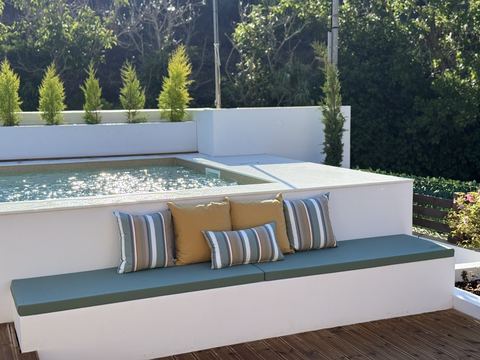
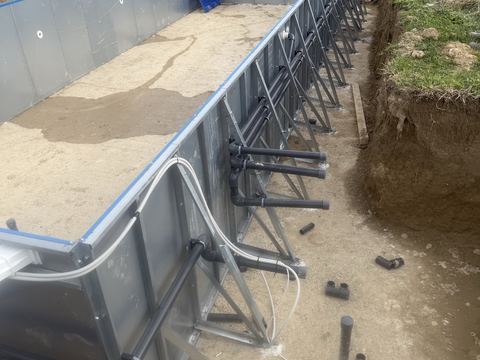
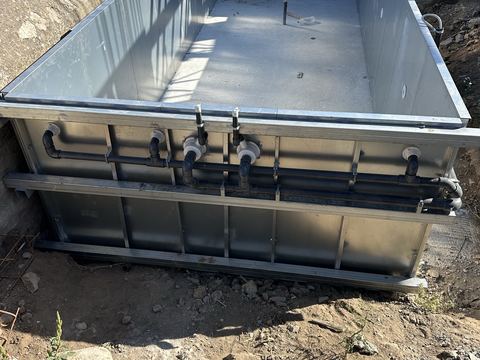
A prefab pool does not have to be fully sunk. It can rise up to 1 m above natural ground level, which solves problems with rock, water or a slope and changes the character of the garden.


When it makes sense
- Rock or hard ground. Less digging means less breaking and less noise.
- Groundwater. With a shallower excavation, the pool floor sits further above the water table.
- Sloping plot. The pool is sunk into the high side and rises on the low side; see a pool on a sloping plot.
- Soil that is hard to remove. In yards with no truck access, or on the islands, less soil means a simpler site.
- Looks. A raised edge becomes a ledge to sit on and gives the pool an architectural presence.
The 1 m is not random: it is the maximum height above natural ground level for the small-scale works approval.
Cladding the outer walls
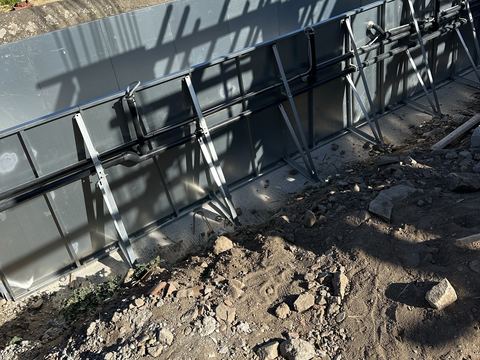
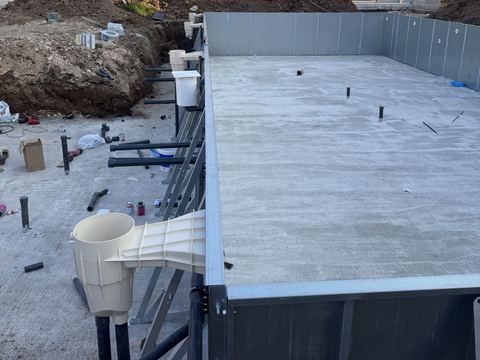
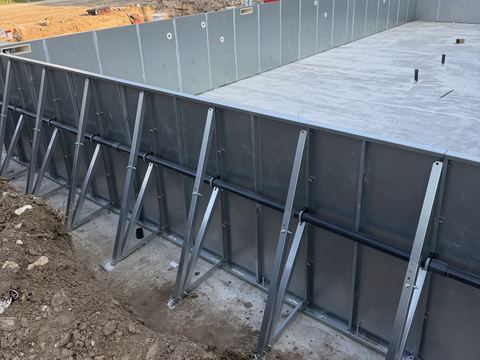
On the inside, a raised pool is the same as a sunken one: the same panels, the same liner. What changes is what you see from outside, because the part that sticks out is clad.
| Material | Character | Maintenance |
|---|---|---|
| Timber | Warm, ties in with a deck and the garden | Oiling or varnishing from time to time, protection from moisture |
| Wood-look composite | Timber appearance, even colour | Minimal, a wash |
| Stone | Solid, traditional or island style | Minimal, checking the joints |
| Planted bank or planters | The pool "sinks" into the greenery | Watering and pruning, with the plants kept away from the water |
Whatever material you choose, the top edge must be comfortable to sit on and must not get scorching hot in the sun.
A deck around the pool
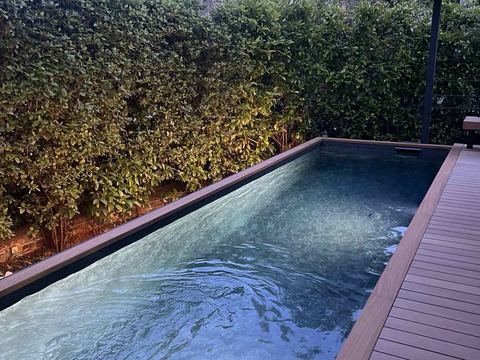
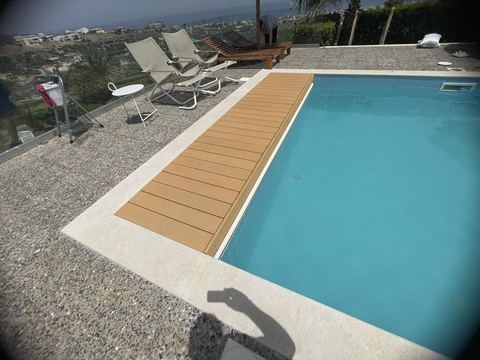
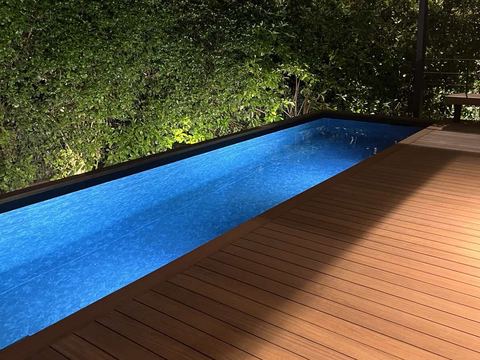
A deck level with the edge makes a raised pool look sunken when you see it from the terrace, while from the garden it looks like a platform. It also gives you a flat area for loungers where the garden has none. Pipework can run under the deck, with access hatches where needed. Materials and ventilation are covered in the pool deck.
Raised or sunken?
A sunken pool blends quietly into the garden and needs no external cladding. A raised pool needs less excavation, produces less soil and keeps the water further from the dust and leaves that wind or rain drag along the ground. There is also a middle way: a pool that is mostly sunk, rising slightly to form a ledge on one side. Which one suits your space becomes clear at the site survey, where the ground, the slope and how you will move around the water are looked at together.
Limitations you should know
- Getting in from outside. You need steps or a deck to reach the edge, and a ladder or steps inside the pool; see pool steps and ladders.
- Exposed walls. The part above ground loses more heat on cool nights, so a cover matters even more.
- Visual bulk. In a small yard, a high edge can make the space feel closed in. Often it is enough to raise the pool a few tens of centimetres rather than the full metre.
- Safety. A high edge makes an accidental fall harder, but it does not replace fencing, a cover and supervision. See pool safety for children.
Questions
Does a raised pool need a different liner?
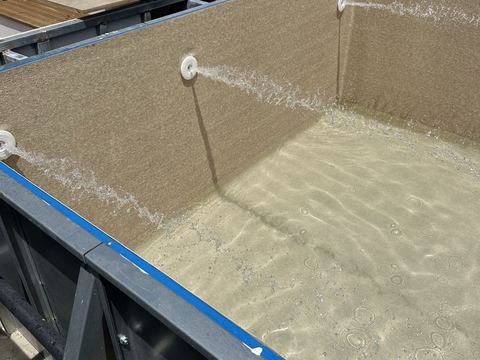
No. On the inside it is the same as a sunken pool, so it takes the same 1.5 mm PVC liner with a 10-year written warranty, or a SOPREMAPOOL anti-slip membrane.
Can a raised pool have an overflow?
The simplest option is a skimmer. An overflow on one or more sides needs room for a channel and a balance tank, and whether it suits your pool is checked at the site survey.
See also
Sloping plot
A pool on a sloping plot: a levelled terrace, a partly raised pool up to 1 m, diverting rainwater from the…
Pool deck
A pool deck in wood or composite: the differences, ventilating the substructure, maintenance, heat underfoot…

Pool excavation
Pool excavation: what changes in loose, clay or rocky ground, groundwater, where the soil goes, machine…