A pool for swimming and exercise: how to design it
For daily swimming at home the pool needs to be long and narrow, e.g. 12×4 m, which is 48 m², below the 50 m² limit. With 1.50 m panels your feet do not touch the bottom, and where there is no room for length, there is counter-current swimming.


Why length matters
In an exercise pool the swimmer wants as many strokes as possible before turning. In a pool 6–8 m long the turn comes after only a few strokes, the rhythm keeps breaking and the workout feels more like going back and forth. From 10 m upwards swimming usually finds a rhythm, and at 12 m it becomes real exercise.
Width, on the other hand, can be limited. A swimmer needs little more than their arm span. That is why a swimming pool is long and narrow, and it often fits along the length of the plot, where a wide pool would not.
Dimensions that work
| Option | Water surface | Who it suits |
|---|---|---|
| 12×4 m | 48 m² | Lap swimming for one or two, with others playing at the same time |
| 12×3 m | 36 m² | One swimmer, a long narrow plot |
| 10×3 m | 30 m² | Relaxed exercise with more frequent turns |
| Smaller pool with counter-current swimming | Depends on the space | Swimming on the spot where there is no room for length |
At 12×4 m it is one of the largest long, narrow pools that keeps its water surface under 50 m², so it can be built with a small-scale works approval if the other conditions are also met. Your engineer confirms how the surface area of your pool is measured. This size is covered in detail under the 4×12 m pool, and for larger dimensions see what changes with a pool over 50 m².
1.50 m depth
For swimming, 1.50 m panels are preferred. At this depth an adult can swim without touching the bottom with hands or feet, and turning at the wall is easier. 1.10 m is enough for relaxed swimming, but tall swimmers will feel the bottom close below them. The two heights are compared under pool depth.
Even at 1.50 m the pool is not for diving. You start from inside the water, pushing off the wall.
Counter-current swimming as an alternative
When the plot cannot fit 10–12 m, there is counter-current swimming: a strong flow of water from the pool wall that you swim against on the spot. A 3×5 or 3×6 m pool with such a system becomes an exercise space without losing its use for cooling off and play. It needs its own pump and an adequate electricity supply; more under counter-current swimming. Whether it is feasible in your pool is checked during the site survey.
Details for people who swim every day
- Side entry. Steps or a ladder on one of the long sides or in a corner, so they do not cut into your lane. See the options under pool ladders.
- Temperature. For exercise the water does not need to be very warm; 26–28 °C is usually comfortable. If you want to swim from spring to autumn, a heating system and a cover make all the difference.
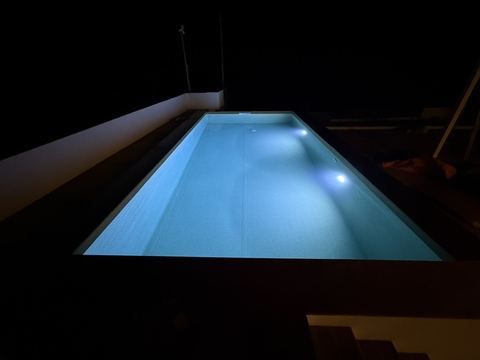
- Lighting. Many people swim early in the morning or late in the evening, so underwater lighting is not just decorative.
- Calm surface. Waterfalls and strong inlets get in the way of swimming; the return inlets are positioned so they do not create a current in your lane.
Questions
Can I build a 13×4 m pool for swimming with a small-scale works approval?
13×4 m gives a water surface of 52 m², above the 50 m² limit, so it needs a building permit. 12×4 m (48 m²) stays below the limit, and your engineer confirms how the surface area is measured.
Is 3 m wide enough for swimming?
For one swimmer, yes, since you swim along the length. At 4 m two people fit comfortably, or one can swim while others play on the other side.
See also
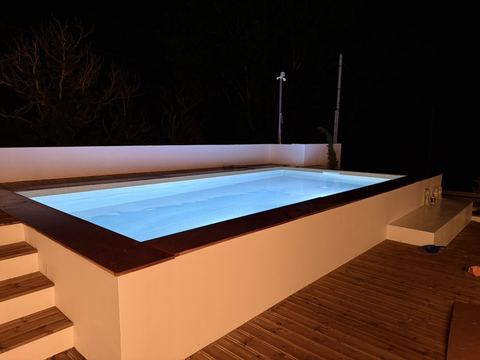
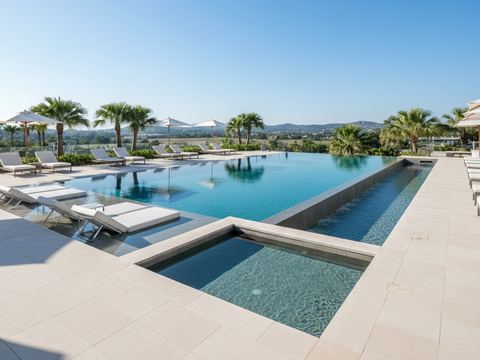
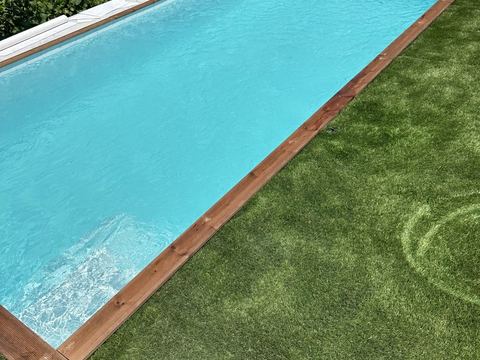
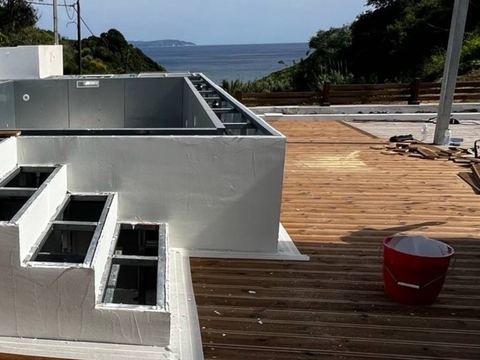
4 × 12 m pool
A 4×12 m pool: 48 m² of water, volume with 1.10 or 1.50 m panels, how it stays below the 50 m² limit,…
Counter-current swimming
Counter-current swim systems: how you swim on the spot in a small pool, built-in or hang-on units, massage,…

Pool depth
Prefab pool depth: 1.10 or 1.50 m panels. What it means for children, swimming, water volume, heating and…