How to renew an older prefab pool
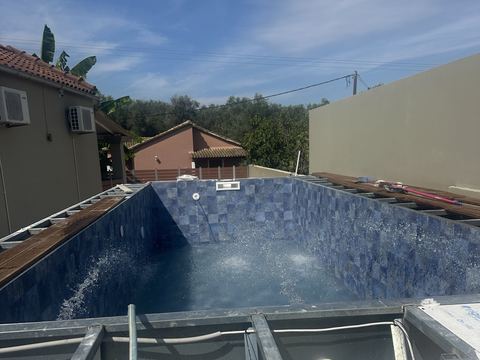
An older prefab pool with sound walls can be renewed without rebuilding it: a new liner, LED lighting, a variable-speed pump, a cover and a new grating make it look and work like new.


First, check the structure
A renovation makes sense when the frame is sound. Before anything else is discussed, the site survey checks:
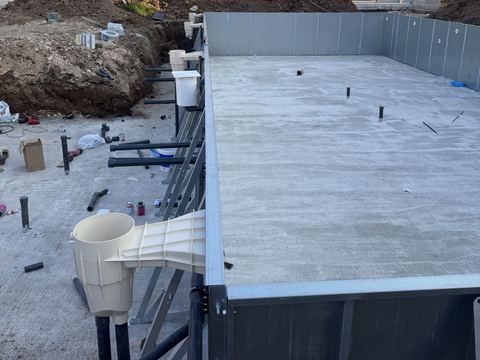
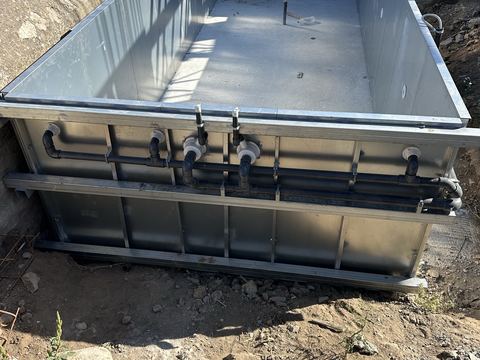
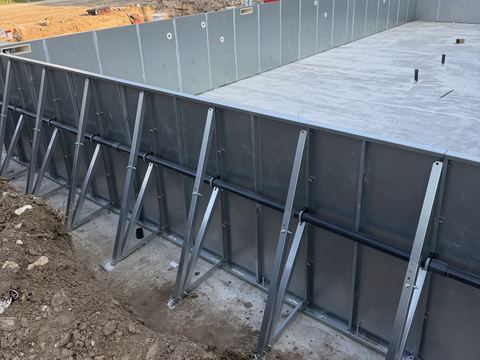
- the panels for rust, deformation and plumb;
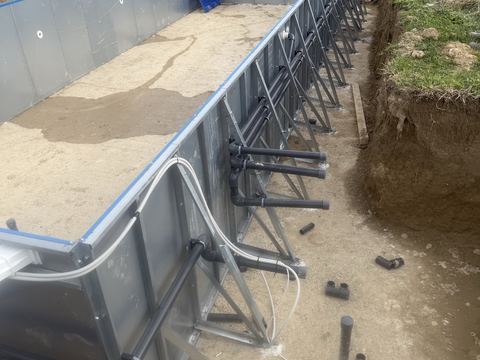
- the support buttresses and anchoring, where accessible;
- the floor for dips, unevenness or roots;
- the pipework and fittings for leaks;
- the electrical installation in the plant room, which in older pools often needs updating.
If the walls are in good condition, everything else can be changed. If not, the order changes: some panels may need replacing before anything else. We explain what to look for in steel walls in steel pool panels.
The upgrades and what you gain
| Upgrade | What you gain | What to know |
|---|---|---|
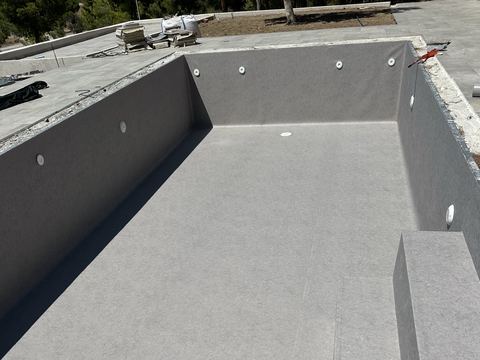
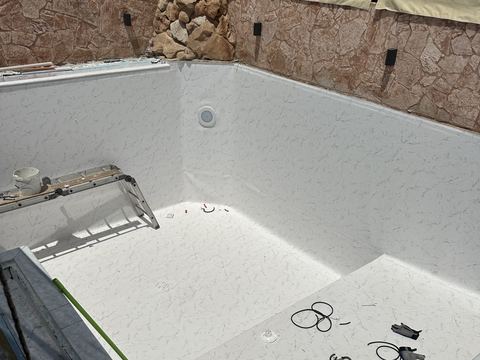
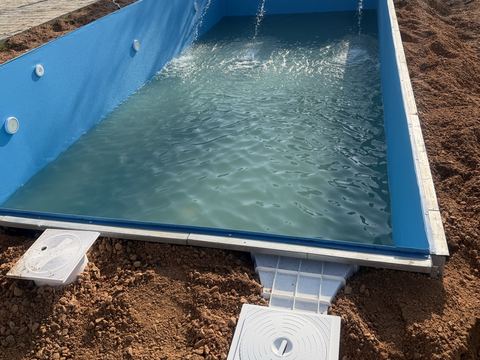
| New liner | Watertightness, a new colour, optional anti-slip steps | Done first, because it needs an empty pool |
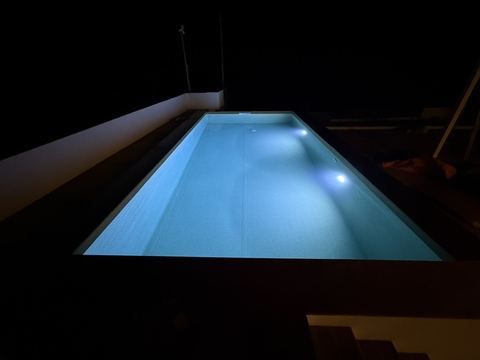
| LED lighting | Far lower consumption than old lights, colours, safety extra-low voltage | New light positions are cut at the same time as the liner |
| Variable-speed pump | Lower electricity consumption, less noise | Check that it suits the filter and pipework |
| Cover | Less evaporation, fewer leaves and chemicals, warmer water | Goes on last, with no work on the pool itself |
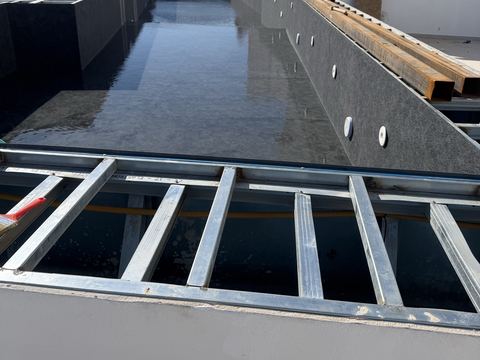
| New overflow grating | A clean look, secure footing at the edge | Overflow pools only |
| Filter media | Better filtration, clearer water | New sand or glass media |
You don't have to do everything. Start with whatever solves a real problem: a leak, a noisy plant room, a faded liner. The other upgrades can follow when your plans allow.
A renovation is also when people often discuss options that were not common when the pool was built: automatic pH and chlorine control, a heat pump for a longer season, a robotic cleaner, an anti-slip membrane on the steps. Which ones make sense for the way you use the pool, and which fit in the existing plant room, is assessed at the site survey.
The right order of work
- Site survey and a list of priorities.
- Work that needs an empty pool: wall repairs, new fittings or lights, liner replacement.
- Refilling and adjusting the chemistry immediately afterwards.
- Plant room: pump, filter, timers, electrical check.
- Last, everything installed from outside: grating, cover, surrounding area.
The logic is simple: the pool should not be drained twice. Anything that needs an opening in the walls, such as an extra light or a return inlet, is done together with the liner, not a year later.
When renovation is not enough
- When many panels are deeply corroded.
- When you want a different size or depth; that is essentially a new build.
- When you want to switch from a skimmer pool to an overflow pool, which changes the edge and the pipework and requires a balance tank.
- When the plant room and pipework are too small for the pool's volume.
In these cases the site survey shows whether a new pool in the same spot is the better option. For all the work, the best season is from autumn to early spring, so the pool is ready before summer.
Questions
Can I renovate in stages?
Yes, as long as you start with the work that needs an empty pool, such as the liner and new lights. The pump, cover and grating can go in later without touching the water.
Is it worth replacing just the pump?
A variable-speed pump is one of the most self-contained upgrades: it goes into the plant room without draining the pool. Just check that the filter and pipework suit its flow rate.
See also
Liner replacement
Pool liner replacement: the signs that it's time, how the change is done step by step, and why it is the best…
Variable-speed pump
Variable-speed pool pumps: why lower speed for more hours means less energy use and less noise, and how to…

Pool lifespan
How many years a prefab pool lasts: what the frame withstands, when the liner is renewed, what wears out the…