How many hours the pool pump should run
In summer the pump should pass all the water through the filter at least twice a day. The hours depend on the volume, the flow rate and above all the water temperature, so the timer changes with the season.


The turnover cycle
The turnover is the time the pump needs to pass a volume of water equal to the pool's volume through the filter. If the pool holds about 40 m³ and the system actually filters 8 m³ an hour, one turnover takes about 5 hours. The real flow rate is usually lower than the pump's rated flow, because of the pipes and the filter.
One turnover does not clean all the water, because the filtered water keeps mixing with the rest. That is why in summer you need at least two turnovers a day, and more with heavy use. The water's route from the suction fittings to the return inlets is explained under water circulation.
A rule of thumb: temperature divided by two
The warmer the water, the faster germs and algae grow and the more chlorine is used up. A commonly used rule says the filtration hours are roughly the water temperature divided by two: with water at 28 °C, about 14 hours. It is a starting point, not a law. Adjust it according to clarity, test results and use.
| Period | Typical water temperature | Indicative hours per day |
|---|---|---|
| Opening, spring | 16–20 °C | 8–10 |
| Early summer | 22–25 °C | 11–12 |
| High summer | 26–30 °C | 13–15 |
| Autumn | 20–24 °C | 10–12 |
| Winter, active winterizing | Below 12 °C | A few hours |
Which hours of the day
- The warm hours. Most of the running time is best scheduled during the day, when the sun is using up chlorine and the water is warming up.
- In several periods. Instead of one continuous block, split the hours into two or three periods, for example morning, midday into afternoon, and a short spell in the evening after swimming. That way the water is never still for many hours.
- After use. A period straight after a lot of swimmers collects body oils and sunscreen from the surface.
- With consideration for the neighbours. If the plant room is near bedrooms, avoid running it late at night.
With a variable-speed pump the logic changes a little: the pump runs more hours at low speed, with short periods at high speed to skim the surface or backwash the filter.
When you need more hours
- After shock chlorination, continuously until the water clears.
- After a storm, African dust or a party with lots of swimmers.
- When the water turns cloudy or tests show the chlorine is not holding.
- During a heatwave, when the water goes above its usual temperature.
The water itself tells you whether the hours are enough. If it stays clear, the chlorine holds between tests and no sediment builds up in the corners, the setting is right. If it starts to look dull, add an hour or two before reaching for more chemicals.
The heat pump, salt chlorinator and UV only work when water is circulating, so the pump hours must cover them too. Check the timer after every power cut and whenever the clocks change. For the link between running hours and the energy you use, see pool electricity consumption.
Questions
Can the pump run only at night?
It can, but it is not the best choice. During the day the sun uses up chlorine and swimmers dirty the water, so that is when filtration is most needed; at night a short period is usually enough.
Should the pump run in winter?
With active winterizing, yes, a few hours a day, and in areas with frost often during the coldest hours as well, so the water in the pipes does not freeze. With passive winterizing the pipes are drained and the pump stays off; see closing the pool for winter.
See also
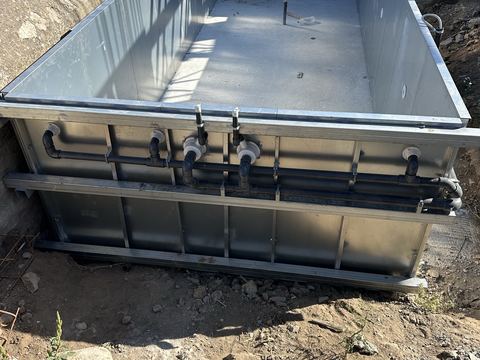
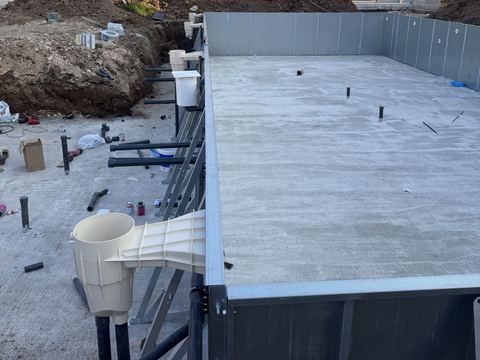

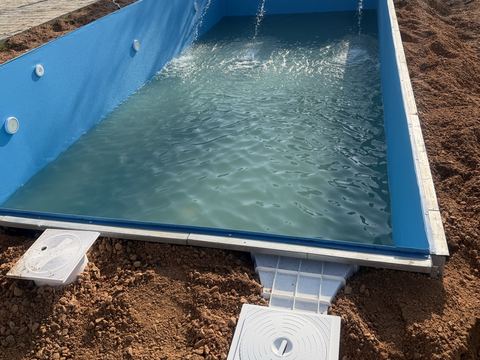
Water circulation
Pool water circulation: turnover time, the route from skimmer to pump, filter and return inlets, where the…
Variable-speed pump
Variable-speed pool pumps: why lower speed for more hours means less energy use and less noise, and how to…
Electricity consumption
Pool electricity consumption: how much the pump, the heating and the other equipment use, and how to cut it…